Group tabletop adaptation with a playable online implementation, rulebook materials, and prototype assets.
Board Game • Horror Adaptation • 2–4 Players
Status
Completed Adaptation
Phasmophobia Boardgame Adaptation
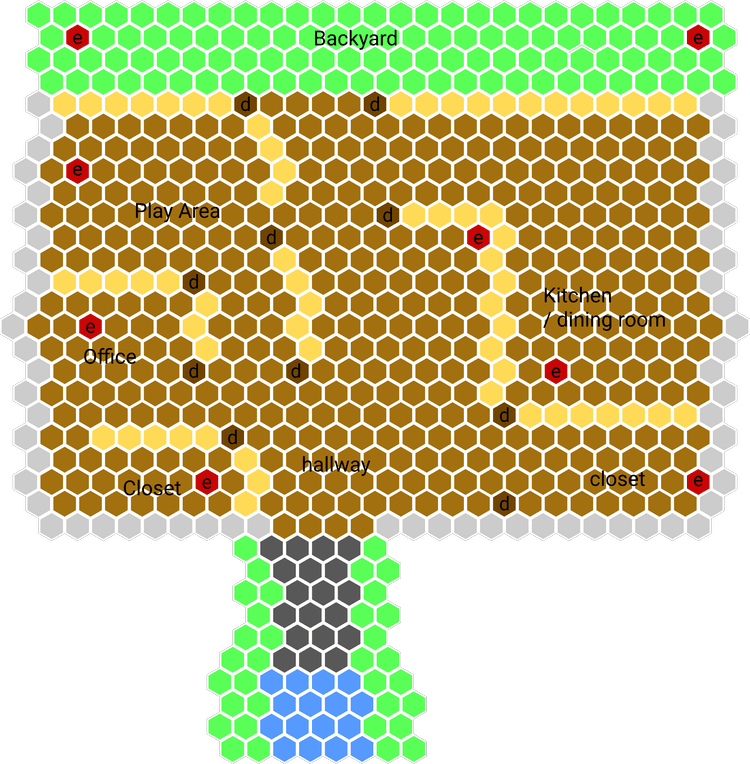
A tabletop adaptation of Phasmophobia, redesigned as a 2–4 player board game with ghost investigation, player equipment, map movement, hidden information, and cooperative survival mechanics.
Board Preview
Map Preview
Demo Video
Demo Video
Project Summary
Project Overview
Concept
This project adapts the investigation-focused horror game Phasmophobia into a tabletop board game format, preserving the core feeling of ghost hunting, evidence gathering, and surviving against an unknown threat.
Team
A group project made by Kevin Lewis, Henry Mattingly, Juan Alvarado, Jose Velarde-Ruiz, Trisha Kopula, and Minmini Sanganathan.
My Role
I created the initial prototype and mechanics ideation, held playtests, refined mechanics, and implemented the game for online play.
Adaptation Goals
Adaptation Goals
Investigation01
Preserve the Investigation Loop
- Translate ghost investigation into a tabletop format
- Keep evidence gathering as a central player objective
- Maintain the tension of identifying the ghost type
- Keep the gameplay centered around risk, deduction, and survival
Roles02
Support Different Play Styles
- Allow players to approach the game in different ways
- Use multiple systems so each role does not feel identical
- Create room for both cautious and aggressive investigation
- Make teamwork useful without forcing every player into the same task
Translation03
Board Game Translation
- Convert map movement into physical board spaces
- Translate digital equipment into cards, tokens, or usable tools
- Represent ghost behavior through boardgame systems
- Balance horror atmosphere with readable tabletop mechanics
Remote Play04
Online Playability
- Implemented the game into an online tabletop format
- Made the game playable remotely
- Organized assets so players could access the board and components
- Supported playtesting beyond a physical-only prototype
My Work
What I Worked On
Prototype01
Prototype
I created the initial prototype and helped establish the first version of the game’s mechanics, structure, and adaptation direction.
Testing02
Playtesting
I held playtests and used the results to refine mechanics, improve clarity, and make the board game version feel closer to the original experience.
Digital03
Online Build
I implemented the game into an online tabletop environment so it could be played digitally and shared more easily.
Worked Well
What Worked Well
Adaptation01
Faithful Adaptation
The project came close to adapting the mechanics of the original game into a tabletop format while still being fun as its own board game.
Systems02
Multiple Systems
Different gameplay systems allowed for different types of play styles, which helped prevent every player from needing to approach the game the same way.
Co-op03
Group Play
The 2–4 player format helped preserve the cooperative feel of the source material while keeping the tabletop version manageable in scope.
Potential Improvements
Potential Improvements
Maps01
More Maps
- The project only had one map due to time limits
- Additional maps would support different player counts more naturally
- More layouts would help match the original game’s variety
- Different map sizes could better support both small and larger groups
Tools02
Expanded Equipment
- The original game has more usable equipment than we could implement
- More tools would create more investigation variety
- Additional equipment could make player roles feel more distinct
- More item interactions would deepen the tabletop adaptation
Polish03
Asset Polish
- The map and assets were a little plain due to production limits
- More time could be spent polishing board visuals
- Card and token readability could be improved
- Visual atmosphere could better match the horror theme
Balance04
Ghost Player Balance
- Different player counts can affect how the lone ghost player feels
- More maps and systems could make the ghost role scale better
- Balance changes could improve the experience for both investigators and ghost
- Additional rules could help each player count feel equally supported
Project Focus
Project Focus
Board Game DesignAdaptation DesignHorror MechanicsCooperative GameplayEvidence GatheringHidden InformationPlaytestingRulebook DesignOnline Tabletop ImplementationGroup Collaboration
Keep Exploring
← Back to all projects